Immigration Down, Rage Up
The UK has finally got the migration numbers David Cameron promised. This has gone down terribly with the people who wanted them.

This week, the anti-migrant groups in our population got some excellent news. Something they’ve positively been gagging for since 2010 finally happened:
Net migration fell to its lowest level since 19971.
The reports came thick and fast - the provisional figures for the year to June 2026 showed that migration added a net 77,000 people to the UK’s population. David Cameron, he of Chipping Norton, finally had his long-held promise realised2.
On this basis, you might have expected Nigel Farage to say something along the lines of:
“After many years of uncontrolled migration, levels are now finally at a point that we can be satisfied. This is a day to celebrate achieving a long-held ambition.”
Except of course he fucking didn’t. What he did instead was post a video about the United Kingdom importing goat herders to replace our young people.


You may be wondering to yourself about why this is. Why there were no groups of men dancing in the streets now that their life mission of fewer foreigners had finally been achieved.
I certainly was. At least for a second or so.
But then I remembered - migration has never really been about migration. Not really. It’s always, always, been nothing more than a culture war, stoked for years and years to keep a few prominent voices in the limelight where they could talk endlessly about “legitimate concerns.”
The problem though is that if these were “legitimate concerns”, these concerns would have now been assuaged, no?
Not on your nelly.
Because over the past several days, we’ve seen what has been a genuine policy achievement3 being shat on from a dizzy height by the same people who have been calling for it for years - and I thought it would be a good idea to have a look at a few of these and prod them with the stick of scrutiny to see if they actually survive contact with reality.
“IT’S LOW BECAUSE BRITONS ARE LEAVING!!!”
On this note, I would like to introduce Andrew from X to the concept of emigration, something which it does appear he’s only just learned to be angry about.
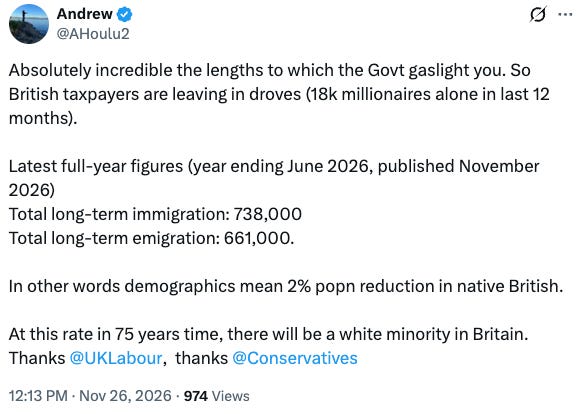
And yes, Britons moving abroad are, indeed, a contributing factor to the NET migration number. The clue is rather in the name, but pretty importantly, there’s a bit of information Andrew appears to have skipped. In the year to June 2025, 893,000 people moved here long-term and 689,000 left. A year later, 738,000 moved here and 661,000 left.
So 155,000 fewer people came and 28,000 fewer people left.
In other words, fewer came and fewer left. I promise, in this case, it really, really is that simple.
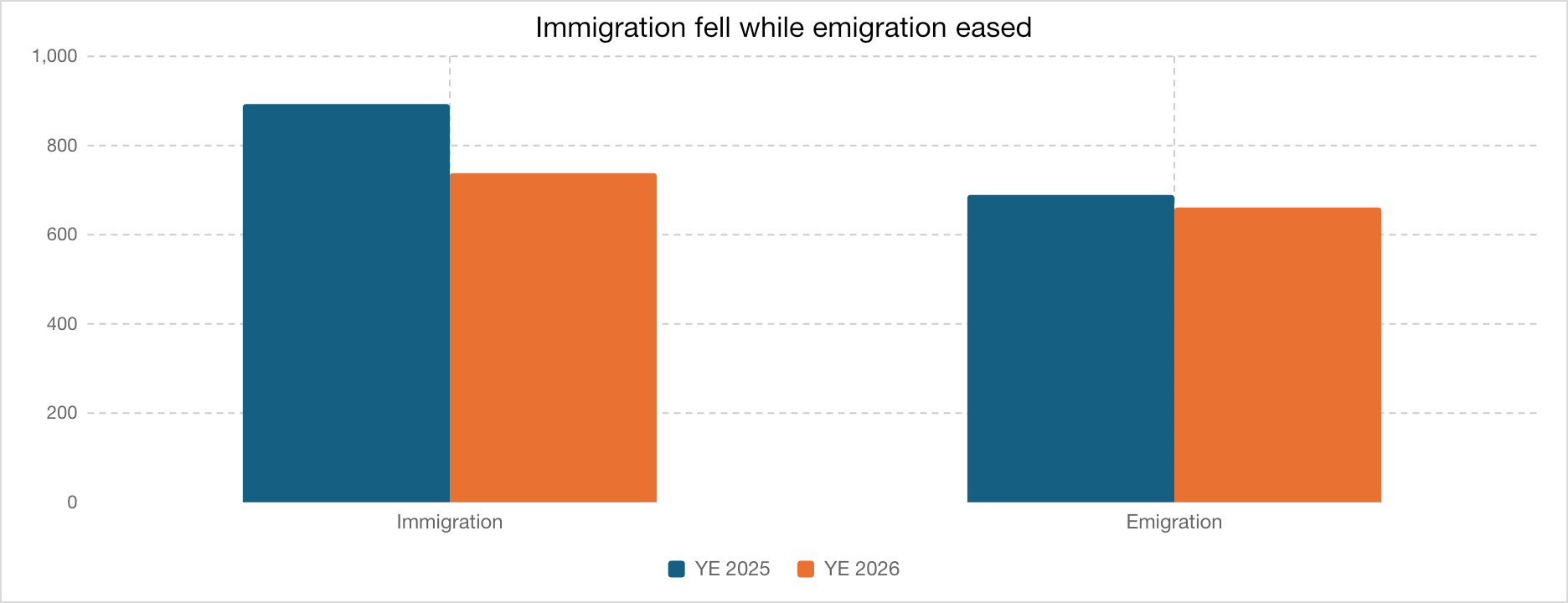
In fact, all else being equal, fewer people leaving would have made net migration go up. The fall in arrivals was big enough to outweigh it, and if you look at the change by nationality, the drop in net migration among non-EU+ nationals accounts for about 95% of the overall fall.
You can correctly observe that British people leaving is part of the calculation and still be spectacularly wrong about why the figure went down.
As for the 18,000 millionaires Andrew has brought along for moral support, you won’t find a millionaire headcount anywhere in this release. Even the wealth consultancy, Henley & Partners, behind many of the millionaire-exodus headlines stopped putting out precise counts this year because the data couldn’t support them.
“BUT WE’RE LOSING A WHOLE GENERATION!”
There’s a real conversation to be had here, and maybe that’s why it’s so endlessly irritating watching Farage and his ilk go on about it.
According to the ONS, around two-thirds of British emigrants in the year leading to March 2025 were 16 to 34 years old. In 2025, the net difference was about 75,000 more British people in that age group leaving than arriving. That gap’s been getting bigger.
But here’s the thing: fewer young British nationals arrived, even as departures dipped slightly. So if you care at all about keeping young people around, maybe that’s the place to start asking questions.
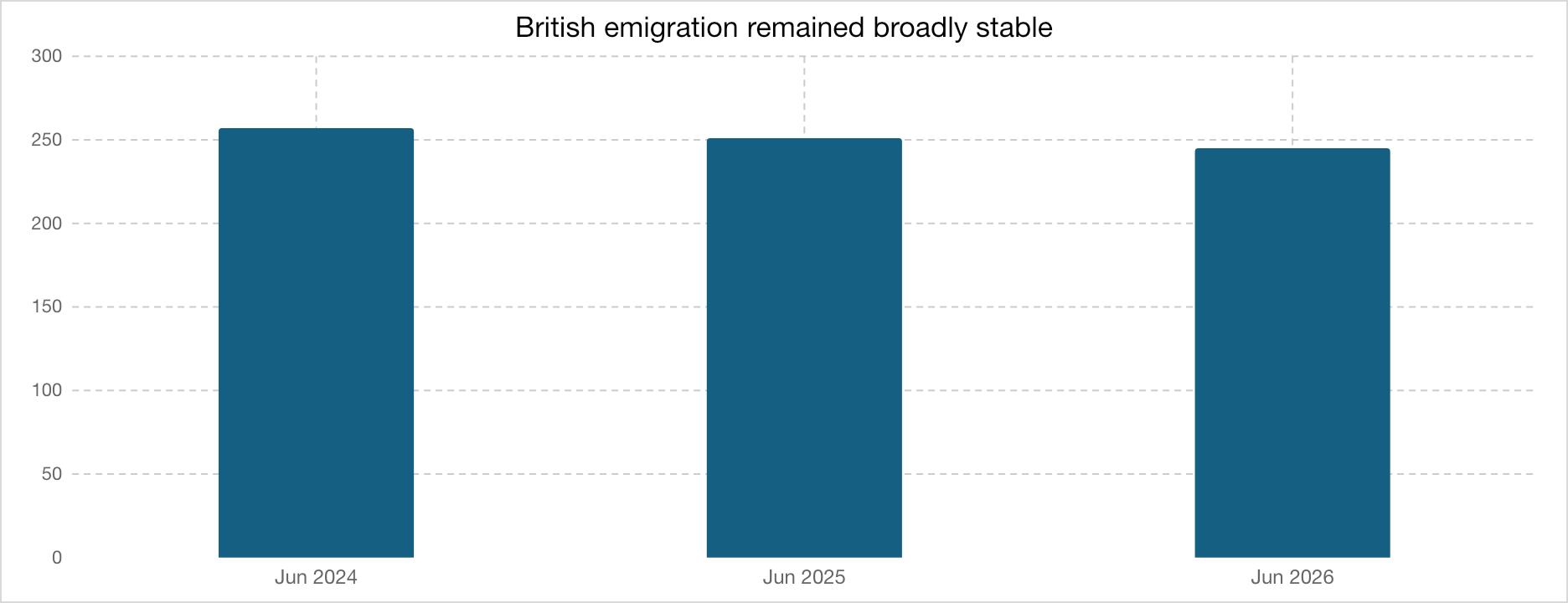
Zooming out even further, for British nationals of any age, the ONS states that departures were about 257,000 for the year to June 2024, then 251,000 the next year, and 245,000 most recently.
These numbers tell you roughly how many people left, but they can’t explain why - whether it was for a better job, a new love on the other side of the world, or just plain old panic running away over what a one-bedroom flat costs.
“FINE. BUT IT’S THE WRONG PEOPLE COMING IN.”
Farage’s argument, in so far as you can call it an argument, is that we’re losing people with skills and replacing them with people who won’t pay as much tax, as said in an interview with Sky on the subject.
Which to my mind is a helluva conclusion to draw given that the ONS figures don’t tell him what the people leaving earned.
Looking at the people who have the audacity to arrive on our shores though, almost half of long-term arrivals from outside the EU+ group came for study-related reasons4 and about a quarter for work-related reasons. To which I can already hear the shouts of “but their dependants are a drain on the Exchequer!”
Also, no.
Being somebody’s dependant on a visa form does not mean you sit at home all day waiting for the taxpayer to send round a hamper.
In fact, the Home Office figures show that in the year to March 2026, at least 75% of eligible Health and Care Worker dependants had recorded PAYE earnings. The figures were at least 52% for Skilled Worker dependants and 19% for Senior or Specialist Worker dependants. Those are lower bounds based on who showed up in the PAYE data.
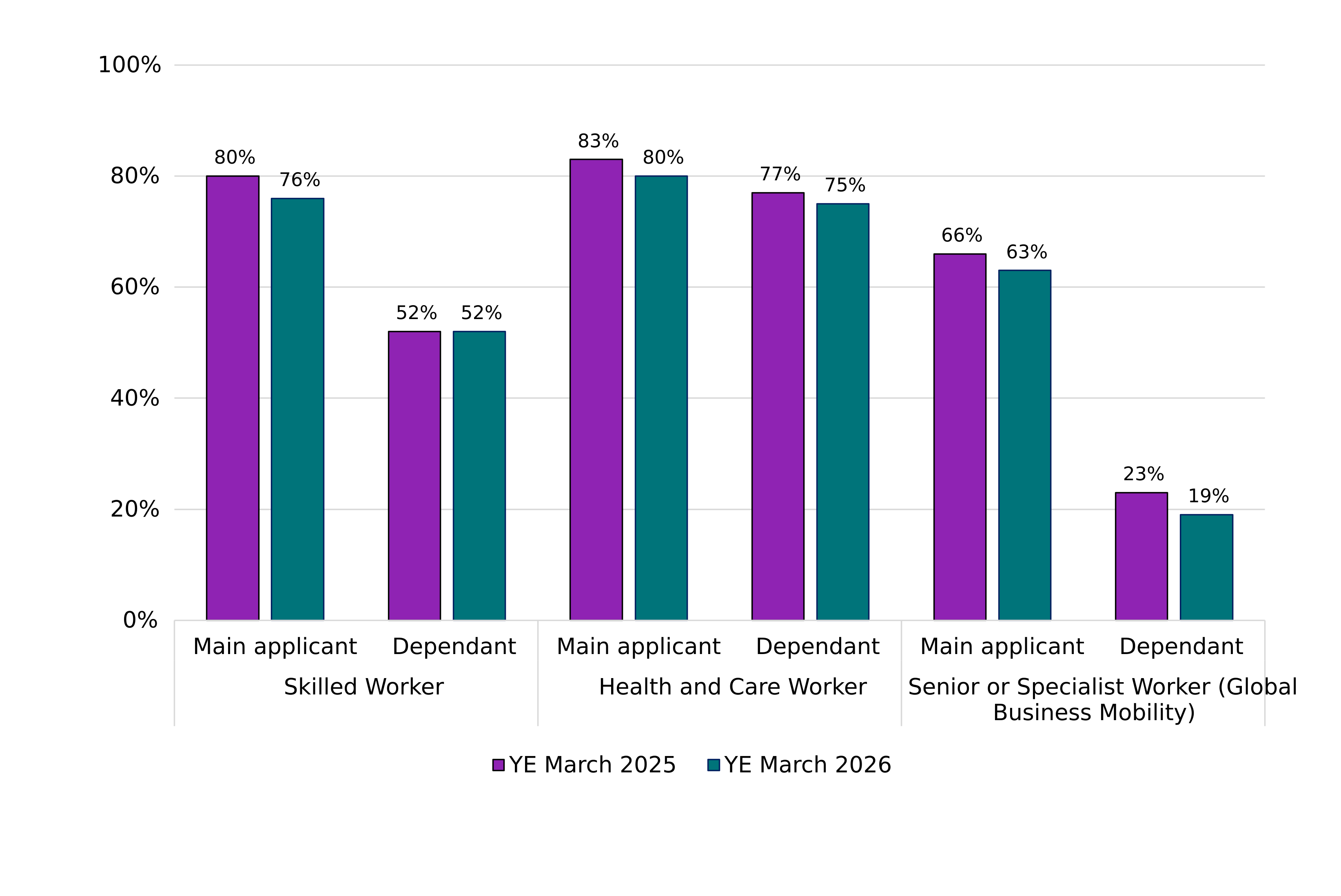
There’s a difference in what the main applicants earn, too. Median annualised PAYE earnings were £33,500 for Health and Care Workers, £51,600 for Skilled Workers and £65,200 for Senior or Specialist Workers, and the reason I’m saying this is to point out that in a household with the breadwinner earning in excess of £60k, there is not that same drive for their partner to work. If you look at it that way, the chart above makes rather a lot of sense.
On the subject of benefits though, this is your regular reminder that main applicants and their dependants on the Skilled Worker and Health and Care Worker routes and the Senior or Specialist Worker route HAVE NO RECOURSE TO PUBLIC FUNDS.
They are not legally able to claim benefits such as Universal Credit or Housing Benefit, and nearly all of these groups earn too much to be eligible for benefits anyway.
The “wrong type of people” argument from Farage didn’t stop there though, and this is where he rolled out his “goat herders from Afghanistan” video linked above, which is really just a play on very similar comments made by Matt Goodwin earlier this year.
Why that image, specifically? This is a man who could have asked why young people struggle to build a life in Britain, but instead, he reached for an Afghan occupation he thought his audience would find beneath them and called the people doing it replacements.
These are ugly arguments to make. They do not add anything whatsoever to the conversations we need to be having about our society.
“BUT LOOK AT HOW MANY WE’VE LET IN!”
This is the point where we get to people reaching for a “BIG NUMBER!!!” to frighten and confuse.
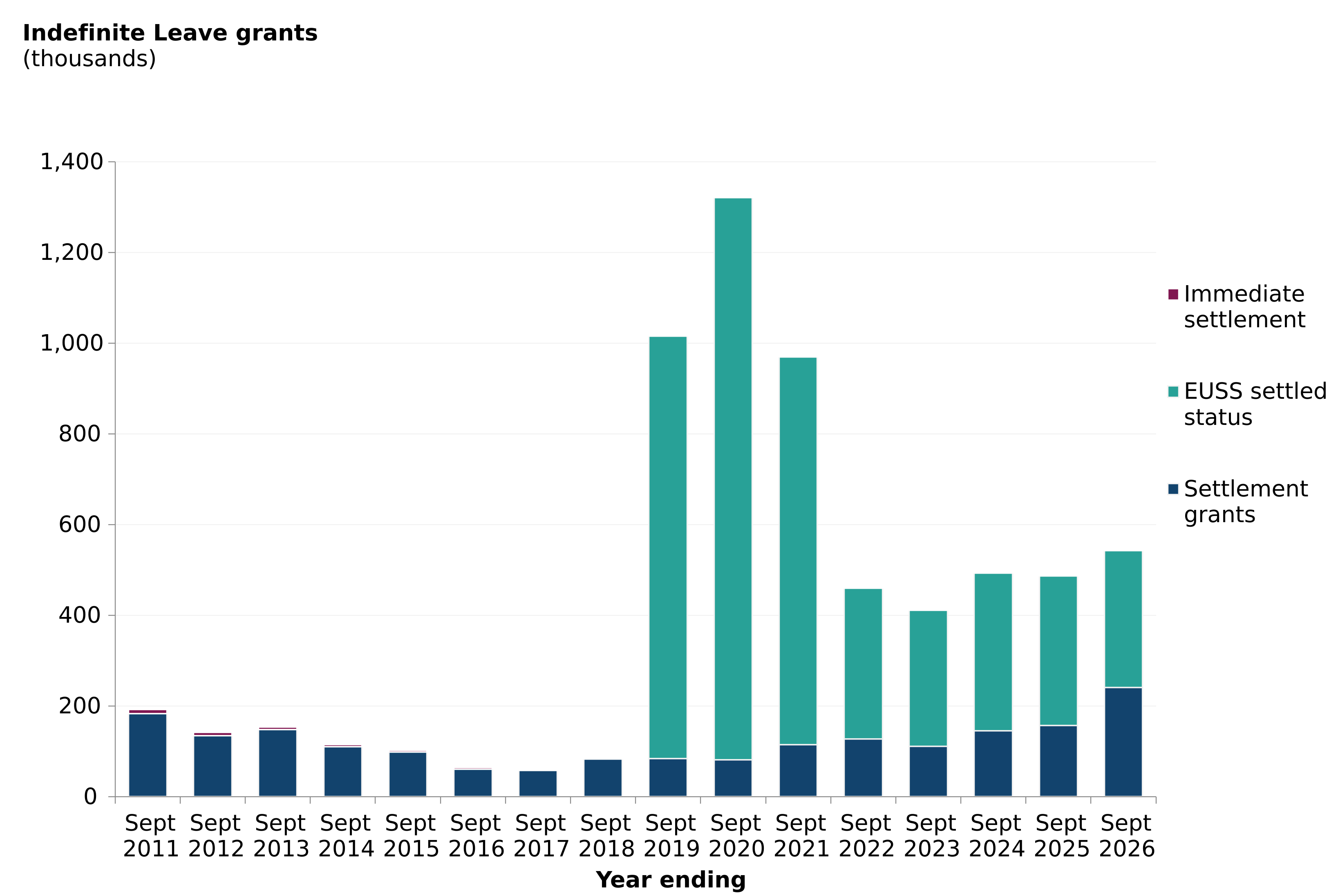
Robert Jenrick pointed to a supposedly “obscene” 544,732 grants of indefinite leave and invited us to picture half a million low-skilled foreigners getting access to benefits.
What is completely absent from this supposed obscenity though is that of those grants, 302,076, so well over half, were under the EU Settlement Scheme - which mainly covers people already living here by the end of 2020 and eligible family members.
In the same release and using the same tactic, Zia Yusuf continued the scaremongering about migrants, saying that successive governments had brought in 19 million people.
But there’s an issue here - what is that referring to? Nineteen million over what period, on what measure, and where can the rest of us see the workings? Are those people still living here? How many of them were seasonal workers who went back to their home countries after picking our turnips? Reform’s release doesn’t give us enough detail to answer any of that.
All context and nuance completely missing from both statements. How terribly strange.
“WHAT ABOUT THE BOATS, THEN?”
Funny you should ask.
In the year to September, detected small-boat arrivals fell by 42%, from 45,659 to 26,581. The number of people claiming asylum fell by 33%, from 109,662 to 73,589. These are two overlapping counts. About 36% of people claiming asylum in that period arrived by small boat.
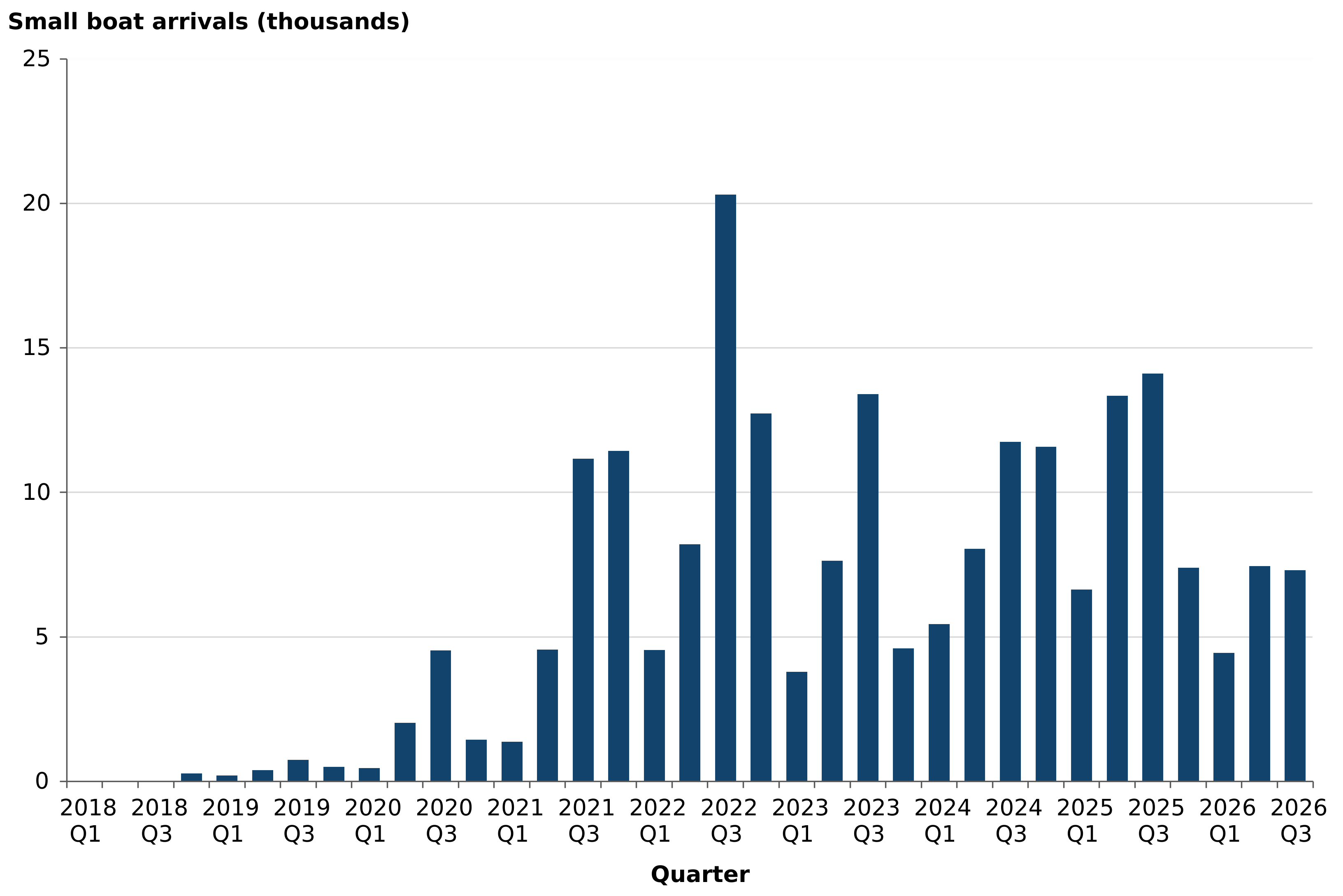
Both figures fell. By quite a lot, actually. That’s literally all there is to it.
A quick little interruption to this deep dive, and if you didn’t know about it - my new book, Bear With Me 2026 is now available for your Christmas shop, with signed copies available to order until 1 December 2026.
You can find all the details in the post linked below:

Also, a very quick thank you to everyone who has bought a copy so far and helped me pursue my incredibly petty ambition of wanting to beat Suella Braverman by selling more than 106 copies.
“AND ANYWAY, IT WAS THE TORIES WHO DID IT.”
Partly, yes - the Conservatives tightened the rules for student and care-worker dependants and raised the Skilled Worker salary threshold in 2024.
Labour, for their part, looked at these changes and ultimately kept much of the Tory policies, before going even further in July 2025, including closing the care-worker route to new overseas applicants. Some of the students who came in earlier years have now gone home, which is also what you’d expect some students to do.
Chris Philp has previously claimed Tory credit for most of the fall and, in practically the same breath, demanded a legally binding cap at a much lower level. Reform wants net migration to go negative.
We’ve gone from the tens of thousands being the thing a Conservative prime minister promised to it being the thing a Conservative shadow home secretary wants credit for delivering and thinks is still too high, and I honestly don’t know just how many times Labour needs to watch this happen before it stops writing policy in the hope that someone to the right of fucking Margaret Thatcher will be sufficiently impressed to vote for them5.
“BUT WHAT ABOUT OUR DOCTORS AND NURSES LEAVING?”
Yes, indeed, Doctors and Nurses, what about them, exactly?
Because from what I’ve picked up in the recent past, the interlocutors who are now lamenting the loss of our locally trained doctors and nurses haven’t been massive fans of them.
Since we have Chris Philp in the front of our minds, I would like to here remind you that in August 2024, when Labour made pay offers to junior doctors and train drivers, he had an almighty fannywobble about whether every other union would now want more money.
In November 2026, he was blaming Labour’s high taxes for British and European people leaving.
It always amazes me just how much people like Philp have to say about a doctor or nurse’s decision to leave the country and remarkably little to say when there is the conversation to be had on how we get them to stay.
Now for the conspicuously missing context on this issue, by June 2025, according to the Institute for Government, resident doctors’ real earnings were still 15.3% below 2010 levels. For consultants the figure was 19.4%, for nurses and health visitors it was 9.4% and for ambulance staff it was 13.9%.
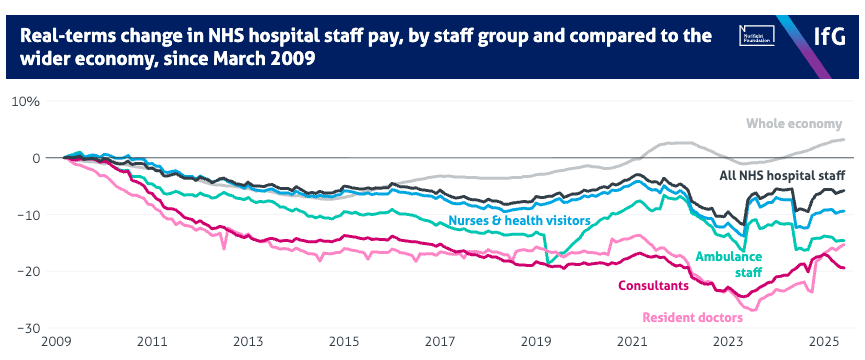
Comparing that to the economy as a whole, on the other hand, real earnings had gone up 3.2%. You can sort of see why our healthcare staff may just be looking for better offers elsewhere.
Those figures predate the June 2026 resident doctor deal in England, which addressed training and pay progression as well as pay. Funny how many of the things people might want out of a career turned out to be things you could actually negotiate.
And this need for departure applies to the doctors and nurses who came to the UK, too.
As it stands, about 42% of doctors on the GMC register were internationally qualified, according to the regulator in June. The GMC recorded 4,880 internationally qualified doctors leaving UK practice in 2024, up 26% on the previous year.
The number of internationally educated nurses, midwives and nursing associates joining the NMC register for the first time fell by 47% in the year to March 2026. Those are colleagues we also need to give a reason to stay.
So yes, I really would quite like to know why somebody trained here would rather work in Australia. I’d also like to know why the person who came here to work alongside them might be looking at a flight home - and I have a very strong suspicion that the answers will involve things like pay, rent, rotas and whether either of them can see a life here they’d actually want.
“Legitimate Concerns” Have Been Addressed - What Now?
The Conservatives spent years telling us net migration needed to be in the tens of thousands. Well, here we are.
You might think that would put some of those “legitimate concerns” to bed. The past few days suggest otherwise.
It is also here where we need to start having a new and far more uncomfortable conversation with this same group of people, which is how are we going to deal with the actual impact of reducing migration?
We’ll need to have answers to questions like who’s going to staff our care homes if we’re closing the care-worker visa route to new applicants from overseas without ensuring that care work becomes an occupation that people can in fact afford to do?
Or what happens to the NHS if we make it harder and harder to not only recruit from abroad, but retain the people we recruited in the first place? How are we going to keep the NHS running if both the people we train here and the people we recruit from abroad can see a better future elsewhere?
And, pretty damned importantly, if we’re going to have fewer people coming to work in this country and contribute both their skills and their pounds to our society, how exactly are we planning on funding the staff and services our rapidly ageing population needs?
This is the can of worms that we are now currently opening up.
We have been told for years that bringing migration down would make the United Kingdom a better place to live. That number is now down.
If your mum still can’t get a care package, if your rent still eats half your wages, and if the doctor who could have treated you is now working in Australia, who do you suppose the people who sold us that promise will blame next?
Because I have a horrible feeling they’ll ask us to get rid of a few more people before any of them asks why the fucking care worker can’t afford the rent.
Outside of the pandemic, of course, but we are doing everything we can to not remind ourselves of those dark days.
The promise was not delivered by him and he had absolutely nothing to do with the solution, but I’m sure he was sitting somewhere fancy patting himself on the back anyway.
A policy achievement in the sense that a stated target was met. Whether it was a sensible target is another matter.
Who, as a reminder, don’t have long term permission to stay, pay an exhorbitant amount of money to study here and effectively subsidise our underfunded higher institutions, and, for the most part, leave when they have their degrees.
A bit of a newsflash here - they were never going to vote for Labour anyway.
Discussion about this post